
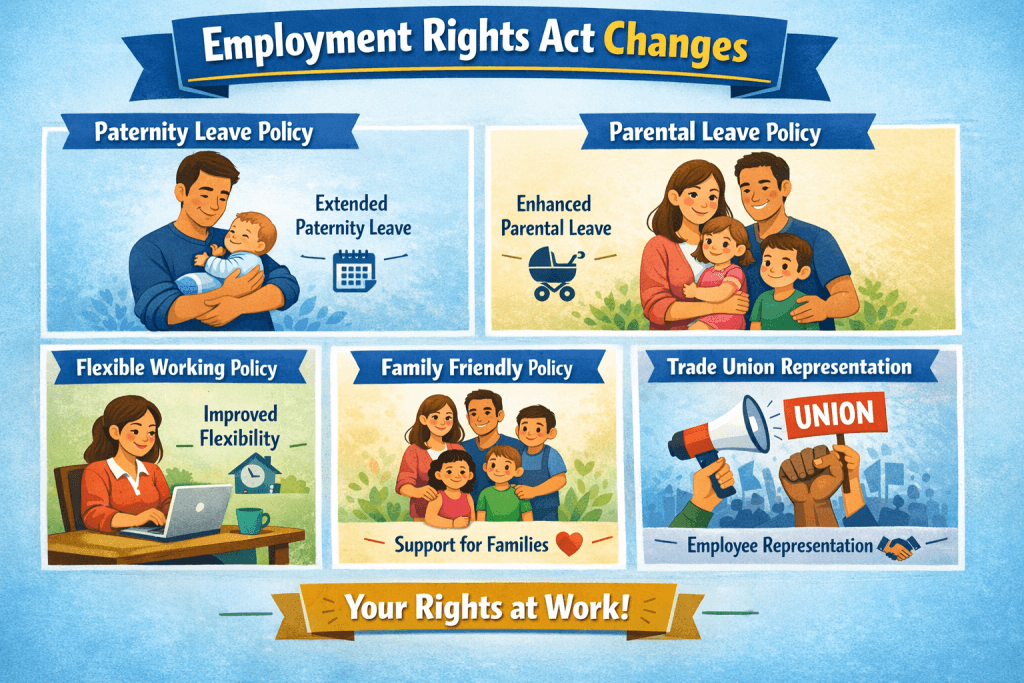
On 8 January 2026, the government confirmed the implementation dates for significant changes to paternity leave, parental leave, and trade union provisions under the Employment Rights Act 2025.
From 18 February 2026, employees will be able to give notice to take paternity leave and parental leave in anticipation of the legislation coming into force on 6 April 2026.
These changes represent an important shift in employment rights and place new responsibilities on employers. The key question is: are your policies and procedures ready?
What’s Changing?
The Employment Rights Act 2025 introduces reforms designed to modernise family leave and strengthen employee protections. While many employers already offer supportive family-friendly policies, the confirmed dates mean organisations must now move from awareness to action.
Key milestones to note:
- 8 January 2026 – Implementation dates confirmed
- 18 February 2026 – Employees can begin giving notice
- 6 April 2026 – Legislation comes into force
This creates a short but critical preparation window for employers.
Why This Matters for Employers
Once employees are entitled to give notice, employers must be able to:
- Respond correctly and consistently
- Apply updated eligibility rules
- Ensure managers understand their obligations
- Avoid legal risk and employee relations issues
Outdated policies or unclear procedures could expose your business to non-compliance, grievances, or reputational damage.
Have You Updated Your Policies and Procedures?
Now is the time to review and update:
- Paternity Leave Policy
- Parental Leave Policy
- Family-Friendly and Flexible Working Policies
- Trade Union and Employee Representation Procedures
- Manager guidance and internal processes
Policies should reflect the new notice rules, timelines, and employee rights, and be communicated clearly across the organisation.
How to Get Prepared
To support a smooth transition, employers should:
1. Review Existing Documentation
Identify gaps between current policies and the new legislative requirements.
2. Update Policies and Templates
Ensure policies, forms, and employee handbooks are compliant ahead of February 2026.
3. Train Managers and HR Teams
Line managers are often the first point of contact—confidence and consistency are essential.
4. Communicate with Employees
Clear messaging helps manage expectations and demonstrates your commitment to compliance and good practice.
Support and Resources Available
Preparing for legislative change doesn’t have to be overwhelming. There are a range of practical resources and expert support options available to help businesses:
- Policy drafting and review
- Manager briefings and training
- HR compliance audits
- Ongoing employment law advice
Proactive preparation not only reduces risk but also strengthens trust with your workforce.
Final Thoughts
The confirmation of dates under the Employment Rights Act 2025 is a clear signal for employers to act now. With employees able to give notice from 18 February 2026, the countdown has begun.
If you haven’t already reviewed your policies and procedures, now is the time to do so.
Getting prepared early will ensure compliance, protect your business, and support your people through these important changes.
Employment Rights Act 2025 – Are You Ready for the 2026 Changes?
The government has confirmed that changes to paternity leave, parental leave and trade union rights will come into force on 6 April 2026.
⏳ From 18 February 2026, employees can begin giving notice to take family leave — meaning employers must be ready well before April.
Now is the time to:
- Review and update policies and procedures
- Ensure manager guidance is legally compliant
- Reduce the risk of non-compliance and employee relations issues
Early preparation will help protect your business and demonstrate best practice in supporting your workforce.
👉 Need help reviewing or updating your policies? Call us on 07984 568523 to find out how we can support you.
