Small Team Conflict Doesn’t Stay Small
In a small team, conflict spreads fast.
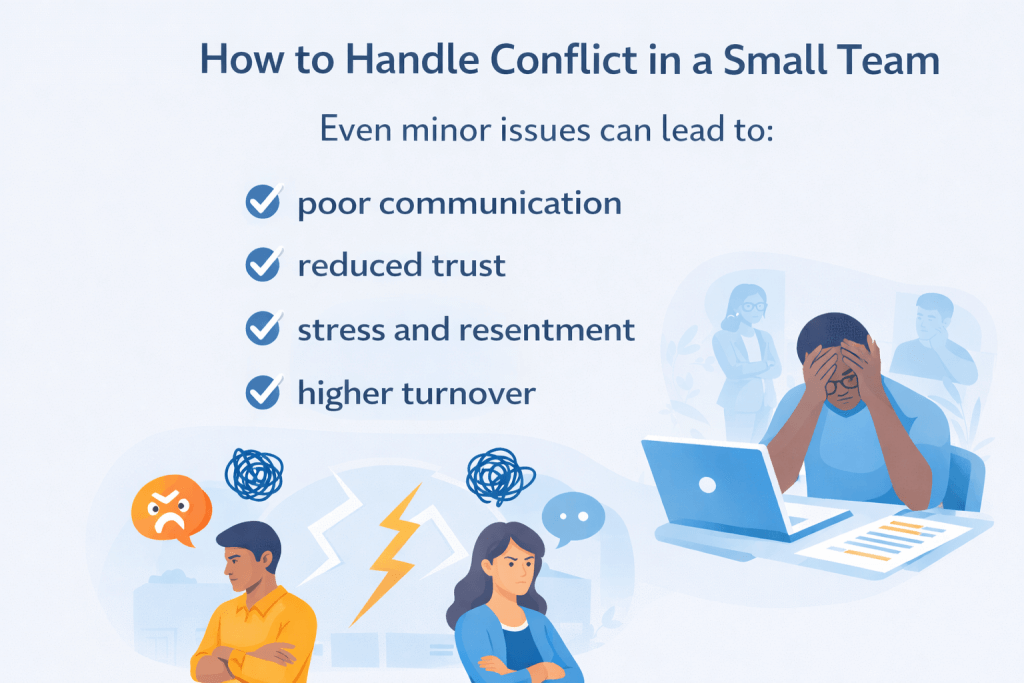
Even minor issues can lead to:
- poor communication
- reduced trust
- stress and resentment
- higher turnover
The aim isn’t “no conflict”.
It’s dealing with it early and properly.
Early Warning Signs of Conflict
Watch for:
- tension in meetings
- sarcasm or passive aggression
- people avoiding each other
- work being duplicated
- quiet drops in performance
The 5-Step Conflict Approach That Works
Step 1: Identify the real issue
Is it about:
- tasks (how work is done)
- relationships (trust/respect)
- values/behaviour
Step 2: Address it early
One calm sentence can stop it escalating:
“I’ve noticed tension — let’s talk it through properly.”
Step 3: Speak to each person 1:1
Ask:
- “What happened?”
- “What impact is it having?”
- “What would a fair outcome look like?”
Keep it neutral and factual.
Step 4: Bring them together with structure
Set clear ground rules:
- respectful tone
- no interruptions
- focus on actions, not blame
Agree actions and a review date.
Step 5: Confirm and follow up
Send a short summary of what’s been agreed and check in.
This protects everyone and keeps things moving forward.
Why HR Support Matters Here
Conflict is where small businesses often make mistakes:
- being inconsistent
- letting issues drag on
- handling conversations emotionally
- missing documentation
HR support helps because:
- conversations stay calm and structured
- outcomes are fair
- issues don’t escalate into formal complaints
- the wider team isn’t affected
FAQ: Handling Conflict in a Small Team
What causes conflict in small teams?
Common causes include unclear expectations, workload imbalance, communication breakdowns, personality clashes, and frustration caused by inconsistent management.
When should I step in as a manager?
Early. If you notice tension, avoidance, sarcasm, or a drop in collaboration, it’s best to step in before the situation becomes personal or formal.
What’s the best way to handle conflict between two employees?
Speak to each person separately first, stay neutral, then bring them together with a structured conversation focused on solutions and agreed actions.
Should conflict always be handled formally?
No. Most conflict can be resolved informally if addressed early. Formal steps are usually needed when the issue is serious, repeated, or escalates into a complaint.
How can HR support help with conflict?
HR helps keep conversations calm and structured, ensures fairness, supports documentation, and reduces the risk of issues escalating into grievances or resignations.
