
The tribunal upheld claims for:
- Direct race discrimination
- Race-related harassment
- Victimisation
- Wrongful dismissal
This case is a stark reminder for employers — and especially franchise operators — that policies alone don’t protect you. What matters is what you actually do in practice, and what you can evidence.
What happened?
The claimant regularly worked over 50 hours per week, was denied annual leave, and was almost rota’d for 89 hours in a single week.
When he raised concerns about his working conditions, the response was not support — it was hostility. The employee was reportedly pressured to reframe his resignation as being for “personal” reasons and was ultimately dismissed without pay during his notice period.
Alongside the hours and leave issues, the tribunal heard allegations of explicitly race-related language, including the manager referring to the claimant as a “slave”. The tribunal found that the conduct amounted to unlawful discrimination and harassment.
Why this case matters: the “reasonable steps” defence failed completely
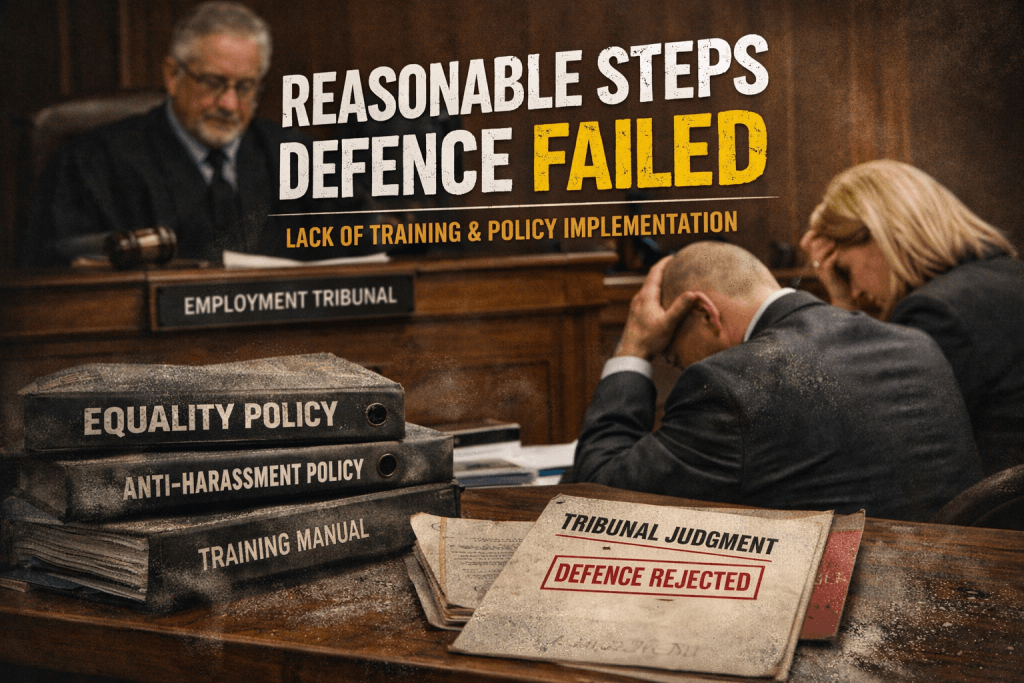
One of the most significant aspects of this case was the tribunal’s finding that the employer’s “reasonable steps” defence failed.
In discrimination claims, employers may seek to defend themselves by showing they took reasonable steps to prevent discriminatory behaviour (for example, training, clear reporting pathways, documented action when concerns are raised).
Here, the tribunal found no evidence of meaningful preventative measures — including:
- no credible training record,
- no workplace guidance being implemented,
- no operational steps taken to reduce or prevent discriminatory conduct.
In other words: having a policy document isn’t the same as having a compliant workplace.
Key lessons for employers (and franchise operators)
Discriminatory language will almost inevitably amount to harassment
Terms like “slave” aren’t “banter”, “workplace culture”, or “heat of the moment” language — tribunals will treat them as serious race-related harassment.
Excessive working hours can become discrimination when linked to race
Long hours aren’t automatically unlawful — but when extreme rostering and pressure is connected to (or imposed disproportionately due to) race, it can cross the line into direct discrimination and harassment.
Mishandling complaints worsens liability
This case shows how quickly risk escalates when employees are met with hostility, discouraged from raising issues, or pressured to change their account of events. Poor complaint handling often becomes a separate claim (e.g., victimisation) and will typically worsen compensation exposure.
4) Policies aren’t enough — implementation and evidence are everything
If you want to rely on “reasonable steps”, you need to show evidence of real-world action, such as:
- training delivered (and refreshed),
- attendance logs,
- manager guidance and supervision,
- documented investigations and outcomes,
- clear escalation routes,
- meaningful consequences for misconduct.
A practical compliance checklist (quick wins)
If you’re an HR team, operator, or franchise owner, ask yourself:
- Do managers receive regular equality/harassment training (and can you prove it)?
- Is there a safe reporting route beyond the line manager?
- Are grievances investigated promptly, with notes and outcomes documented?
- Are rota patterns monitored for excessive hours and risk of exploitation?
- Are leavers protected from retaliation during notice periods?
- Do you conduct periodic culture and conduct spot checks across sites?
Final thought
This award is a reminder that discrimination risk isn’t theoretical — it’s operational. For franchise businesses in particular, day-to-day management behaviour is often the biggest legal exposure.
Having the right policies is the starting point. Proving they live in the workplace is what protects you.
Call us now on 07984 568523 to arrange an appointment.
