Scaling Hiring Shouldn’t Mean Lowering Standards
Early hires often happen through instinct.
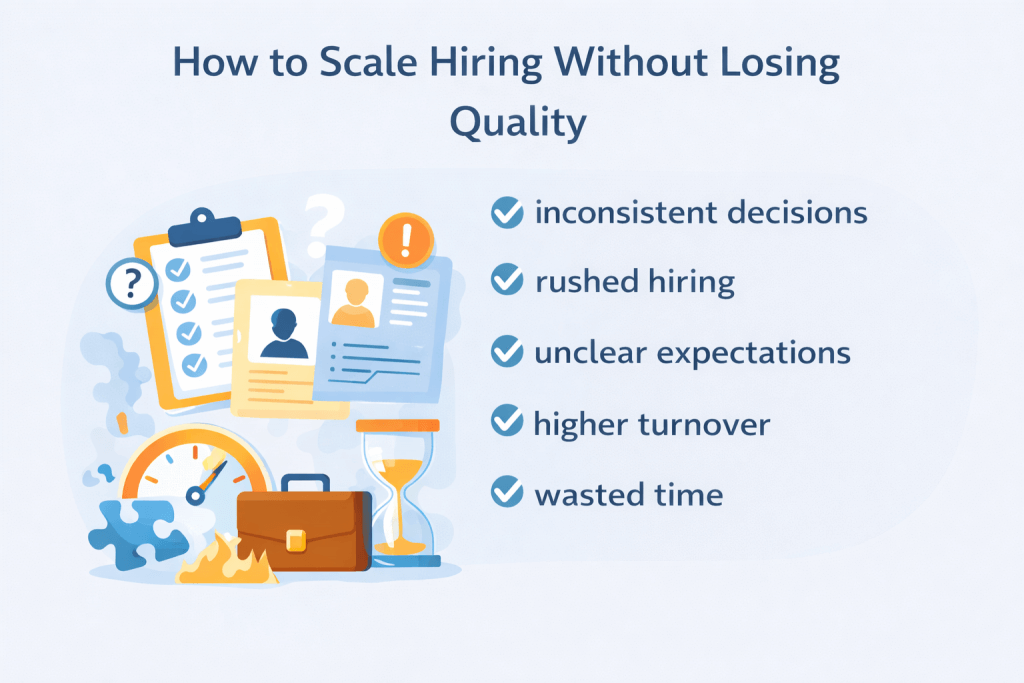
But once you’re growing, “gut feel” leads to:
- inconsistent decisions
- rushed hiring
- unclear expectations
- higher turnover
- wasted time
A simple system protects quality and makes hiring easier.
Common Hiring Mistakes When You Grow
- vague job descriptions
- unstructured interviews (“just a chat”)
- too many stages
- slow decisions
- weak onboarding
A Hiring Process That Scales
Step 1: Define success in 30/60/90 days
Write outcomes (not just tasks).
This improves clarity and decision-making.
Step 2: Use a scorecard
Rate candidates against consistent criteria.
Example:
- job skills
- communication
- problem solving
- ownership
- values/behaviour
- learning speed
Step 3: Use structured interviews
Ask the same key questions for every candidate.
This improves fairness and reduces bias.
Step 4: Keep stages short
A strong process:
- 20-min screening call
- 60-min structured interview
- short practical task (if relevant)
- offer + references
Speed wins strong candidates.
Step 5: Improve onboarding
Hiring isn’t finished when they accept.
Strong onboarding includes:
- day 1 plan
- week 1 goals
- buddy/support person
- 30/60/90 check-ins
Why HR Support Is Essential When Hiring Scales
Hiring quickly without HR structure often creates repeat problems:
- unclear job expectations
- inconsistent interviews
- weak onboarding
- people leaving early
- managers overwhelmed
HR support helps you:
- build a repeatable process
- improve retention
- protect your business legally
- scale without chaos
FAQ: Scaling Hiring Without Losing Quality
How do I scale hiring without making bad hires?
Use a repeatable process: define role outcomes, use structured interviews, score candidates consistently, and improve onboarding so new hires settle quickly.
What is a structured interview and why does it matter?
A structured interview uses the same core questions for every candidate. It improves fairness, consistency, and decision-making — especially when multiple people are interviewing.
Do scorecards really improve hiring quality?
Yes. Scorecards reduce “gut feel” hiring, improve consistency, and help teams make decisions based on evidence rather than impressions.
How many interview stages should a small business have?
Usually 2–4 steps is enough: a short screen, one structured interview, a small task (if relevant), and references before offering.
Why does HR support matter when scaling recruitment?
HR helps build a consistent hiring process, reduces risk, improves candidate experience, strengthens onboarding, and increases retention — which saves time and money.
Call us to discuss how we can help you recruit new staff on 07984 568523.
