Scotland’s hospitality sector runs on flexibility — shift patterns, seasonal demand, casual arrangements, and fast-paced recruitment.
But a major legal shift is coming, and many hospitality SMEs won’t feel the impact until it’s too late.
The Employment Rights Act 2025: Why Hospitality SMEs Should Pay Attention
The Employment Rights Act 2025 introduces significant changes that affect how hospitality employers manage people, contracts and working patterns — particularly where businesses rely on flexible staffing models.
Key areas under greater scrutiny include:
- Day-one employment rights
- Predictable working patterns
- Flexible working requests
- Zero-hours and casual arrangements
- Unfair dismissal protections
- Enhanced enforcement powers
For hospitality employers, these changes are directly tied to the working practices most commonly used across the sector.
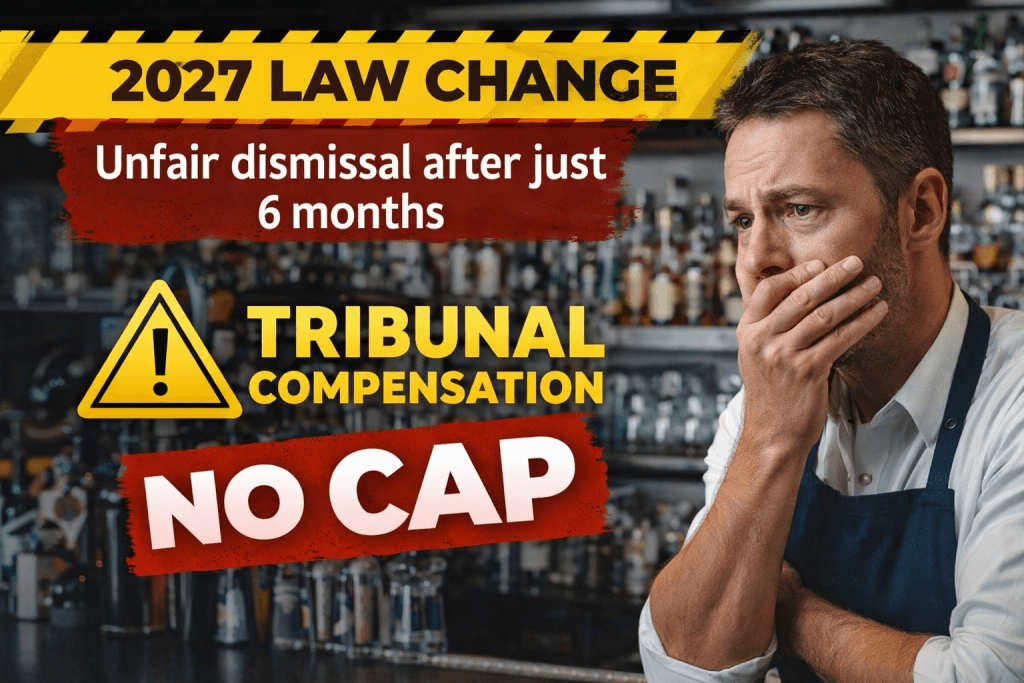
The 2027 Change That Increases Tribunal Risk Overnight
From 1 January 2027:
✅ Employees will qualify for unfair dismissal protection after just six months’ service
✅ The unfair dismissal compensation cap will be removed
That combination significantly increases legal and financial exposure for hospitality SMEs.
If your business has:
- high staff turnover
- probationary dismissals
- seasonal recruitment
- shift-based working patterns
- limited in-house HR support
…your risk profile is likely higher than you think.
Why Hospitality Businesses Are Vulnerable to Claims
Hospitality remains a high-risk sector for employment disputes due to:
- informal management practices
- inconsistent documentation
- poorly drafted or outdated contracts
- lack of current HR policies
- process gaps around probation, conduct and dismissal
Tribunals often come down to two things:
documentation and process.
Even if you believe you acted reasonably, weak contracts or unclear procedures can make a claim much harder — and more expensive — to defend.
Contracts and Policies: Your First Line of Defence
Under the new landscape, it’s no longer enough to rely on template documents or contracts that don’t match how your business actually operates.
Hospitality SMEs should review:
- hours and flexibility clauses
- overtime and shift arrangements
- probation provisions and dismissal processes
- holiday calculations
- variation clauses and notice periods
- disciplinary and grievance procedures
If your written terms don’t reflect reality, a tribunal is more likely to favour the employee’s interpretation.
Practical Steps to Take Now
To reduce risk before 2027:
- Audit your employment documentation
- Review and update contracts (especially flexibility and probation)
- Align working practices with written terms
- Update core HR policies
- Train managers on fair and compliant processes
- Deal with issues early — before they escalate
Prevention is almost always cheaper than defence.
How LBJ Consultants Can Help
LBJ Consultants work with hospitality SMEs across Scotland to:
- audit and redraft employment contracts
- update disciplinary, grievance and core HR policies
- review probation and dismissal processes
- align documentation with operational reality
- embed Fair Work principles into workplace practice
- train managers on legally compliant decision-making
- reduce tribunal risk before issues escalate
We understand the pressures hospitality businesses face: tight margins, seasonal demand, recruitment challenges, and lean management structures. Our approach is practical, preventative and commercially focused.
Speak to Us Confidentially
If you operate a hospitality business in Scotland, now is the time to strengthen your employment framework — before the 2027 changes increase tribunal exposure.
📞 Call LBJ Consultants on 07984 568523 for a confidential discussion.
